
FES Solutions — Texas Tuff Rock Bags
8-Ton Texas Tuff Rock Bag being lowered from a crane vessel for subsea cable protection
Application — Offshore

Offshore Subsea Protection with Texas Tuff Rock Bags

Texas Tuff Rock Bags protect subsea cables, pipelines, monopiles, and offshore piles from scour, free span, and seabed mobility. 8-Ton quad-layer bags lower from a crane vessel in minutes and stay in place under tidal current and storm load — for a long-term subsea service life.

Request an Offshore Quote
Vessel & ROV-compatible deployment
Engineering response in 1 business day
Why Engineers Specify

Why Offshore Engineers Specify Texas Tuff Rock Bags

Offshore protection has to work the first time. Vessel mobilization is expensive, weather windows are short, and survey and ROV time is billed by the day — so the placement plan needs to be fast, predictable, and survey-friendly. Rock dumping from a fall-pipe vessel works but is hard to target around a cable crossing or a free span; loose stone migrates under current and produces irregular cover. Concrete mattresses come in fixed sizes that rarely match a real seabed profile, and articulating concrete carries crane-vessel rigging time that compounds across a campaign.

Texas Tuff Rock Bags solve those constraints. Each 8-Ton bag is a discrete, surveyable unit lowered by single-point crane lift onto a precise seabed coordinate. The quad-layer mesh holds the rock as a defined geometry that conforms to the seabed without slumping flat. The same bag works for cable protection, pipeline crossings, monopile scour, and pile foundations — one product across the full campaign instead of three or four.

Offshore Use Cases

Where Texas Tuff Rock Bags Are Used Offshore

Four subsea use cases — same bag construction, scaled and grouped for the asset and the design event.

Barnacle-covered piles in salt water — the long-immersion subsea environment Texas Tuff Rock Bags protect array, export, telecom, and power cables in

Subsea Cable Protection (Wind, Telecom, Power)

Place Texas Tuff Rock Bags over array cables, export cables, telecom cables, and HVDC links at exposed reaches, free-span sections, third-party crossings, and shore-approach landfalls. Bags are sized and grouped to meet impact-energy and burial-equivalence specifications, with full surveyability from ROV or multibeam — every unit lands on a coordinate, and every unit can be verified on as-built. The 8-Ton bag is the standard offshore size; 4-Ton fits shore-approach and shallow-water work.

Offshore oil & gas platform on the horizon — the asset class whose subsea pipelines need armor at crossings, free spans, and shore approaches

Pipeline Crossings & Free-Span Mitigation

Subsea pipelines develop free spans where seabed mobility undercuts the line, and they need armor at third-party crossings, valve manifolds, and shore approaches. Texas Tuff Rock Bags drop into free-span supports and crossing stacks with single-point lifts — faster than concrete-mattress rigging and more conforming than rock dumping. The flexible mesh sits down on the pipeline without point loads and stays in place under tidal and storm-induced bed shear.

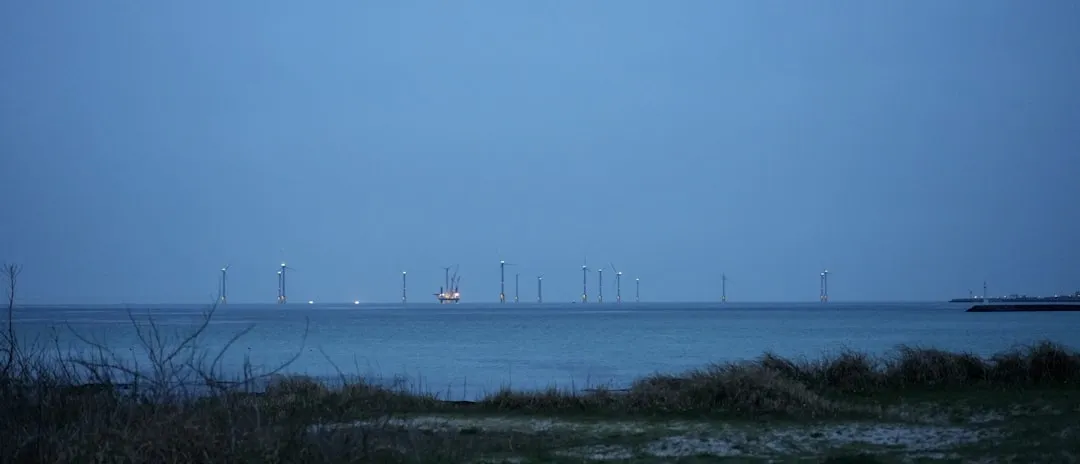
Offshore wind turbines on monopile foundations rising from the sea — where Texas Tuff Rock Bags armor against horseshoe-vortex scour

Monopile & Foundation Scour

Offshore wind monopiles, met-mast foundations, and jacket leg foundations develop scour holes from horseshoe-vortex flow. Texas Tuff Rock Bags placed as a filter and armor layer around the structure dissipate the scour mechanism, hold the seabed in place during storm load, and provide a stable working seabed for cable J-tube exits and turbine maintenance vessel positioning.

Navigation aid in a marine basin with a steel sheet-pile quay wall — the kind of pier, pile, and channel-marker structure Texas Tuff Rock Bags armor against current scour

Offshore Piers, Piles & Navigation Aids

Navigation aids, offshore piers, jetty heads, and individual driven piles in open water all need armor against current-induced scour. Texas Tuff Rock Bags wrap individual piles, group around pile clusters, and continuous-line along pier toes. The mesh conforms to bed change rather than fracturing, and the discrete-unit form makes inspection and repeat-armor placement straightforward across the asset's service life.

Related applications & industries: Marine & Ports → Bridges → Offshore Wind → Oil & Gas →
Subsea Performance

How Texas Tuff Rock Bags Perform in Subsea Conditions

Subsea conditions are the longest-duration immersion in the rock-bag application matrix. Texas Tuff Rock Bags are built from virgin polyester mesh — not recycled — because virgin polyester retains more strength under thermo-mechanical stress and emits roughly 30% fewer microplastics under ISO 4484-1 testing. Independent laboratory testing certifies the material at a long-term service life in water under EN 12447 hydrolysis resistance.

The 8-Ton offshore unit uses a quadruple-layer mesh on a 50 mm grid with a 16 mm lifting rope at the four corners and a heavy iron ring at the neck — engineering margin sized for the impact loads of subsea placement and the cyclic loads of tidal current. Above the splash zone, the same polyester carries approximately 30 years of UV resistance (EN 12224) for any portion that ends up exposed.

Quad-layer mesh
50 mm grid on the 8-Ton offshore unit
Salt-water immersion
EN 12447 — 50-yr subsea life
Microplastics
ISO 4484-1 — ~30% fewer than recycled
16 mm lifting rope
Four-corner rigging for single-point lifts
Offshore Sizing

The Offshore Size: 8-Ton Texas Tuff Rock Bag

The 8-Ton bag is the standard offshore unit. The 4-Ton fits shore-approach, shallow-water, and access-constrained work.

8-Ton Standard offshore unit
Mesh / Fill
50 mm mesh · 75–200 mm fill rock
Volume
6.0 m³ · 3.0 m diameter
Profile
0.85 m tall · quad-layer mesh · 16 mm lifting rope
Best for
Subsea cable protection, monopile scour, pipeline armor — the standard offshore unit.
Mesh / Fill
25 mm mesh · 50–200 mm fill rock
Volume
2.71 m³ · 2.4 m diameter
Profile
0.6 m tall · double-layer mesh
Best for
Shore approach, shallow-water cable, intertidal pipeline, navigation piles in protected water.
Mesh / Fill
25 mm mesh · 50–200 mm fill rock
Volume
1.13 m³ · 1.9 m diameter
Profile
0.4 m tall · double-layer mesh
Best for
Access-constrained protected-water work, navigation aid foundations in nearshore.
Mesh / Fill
Elongated mesh log — fills continuous linear runs
Volume
Built to crossing / toe length
Profile
Continuous toe / line
Best for
Continuous pipeline armor, jetty toe in protected water.
Why the 8-Ton is the offshore standard

Quad-layer mesh on a 50 mm grid, 16 mm lifting rope at four corners, and a defined-geometry footprint that conforms to seabed without slumping flat — engineering margin sized for vessel placement, tidal current, and storm load.

See 8-Ton product spec
Subsea Installation

Subsea Installation: Vessel-Deployable Placement

Subsea installations are vessel work. Bags are filled onshore in a steel production frame at the staging yard — 5 to 8 minutes per bag using an excavator and two laborers — then shipped to the load-out quay and craned onto the installation vessel. Vessel placement uses single-point crane lifts: the bag is rigged to the 16 mm lifting rope at the four corners, lowered through the splash zone, and set on the seabed at a survey-marked coordinate.

ROV-assisted touchdown is supported by the discrete-unit geometry — every bag lands as a unit, not a cloud of loose stone. Crews typically place 8 to 20+ bags per vessel-day depending on water depth, current window, crane spread, and survey verification cycle. The bag form is compatible with crane vessels, fall-pipe vessels rigged for single-bag lift, and standard offshore construction barges with on-deck cranes.

  1. 1

    Fill bags onshore in a steel production frame at the staging yard — 5 to 8 minutes per bag.

  2. 2

    Transport to the load-out quay and crane onto the installation vessel.

  3. 3

    Rig single-point crane lift to the 16 mm lifting rope at the four corners.

  4. 4

    Lower through the splash zone to the survey-marked seabed coordinate.

  5. 5

    Verify touchdown by ROV; repeat at 8–20+ bags/vessel-day.

Full installation guide
Offshore Comparison

Rock Bags vs. Concrete Mattresses, Rock Dumping & Frond Mats

Texas Tuff Rock Bags compete on the three axes offshore engineers actually weigh: precision of placement, vessel-day efficiency, and long-duration subsea performance.

Placement precision
Texas Tuff
High — discrete unit on coordinate
Concrete mattress
Medium — fixed panel size
Rock dumping
Low–medium — loose stone cloud
Frond mat
Medium — flexible mat
Vessel-day units
Texas Tuff
8–20+ bags/day
Concrete mattress
Limited by crane rigging cycles
Rock dumping
Continuous, but tonnage-driven
Frond mat
Limited by mat handling
Conforms to seabed
Texas Tuff
High — flexible mesh
Concrete mattress
Low — rigid panels
Rock dumping
Medium — settles by gravity
Frond mat
Medium — drapes loosely
Free-span / cable suitability
Texas Tuff
High — single-point lifts
Concrete mattress
Limited — point-load risk on cable
Rock dumping
Lower — burial-equivalence dependent
Frond mat
Used as scour-promoter, not armor
Subsea service life
Texas Tuff
Long-term
Concrete mattress
Decades — concrete cracks
Rock dumping
N/A — stone displaces over time
Frond mat
Frond degrades; periodic re-mat
Inspection / survey friendliness
Texas Tuff
High — unit-by-unit
Concrete mattress
High — fixed footprint
Rock dumping
Lower — diffuse cover
Frond mat
Medium
Offshore FAQ

Offshore FAQ

Installation, performance, and survey-compatibility answers for offshore wind developers and EPCs, oil & gas operators, cable owners, pipeline operators, and navigation authorities.

Talk to engineering
One business day response.
+1 512-766-6608 →

01 How are Texas Tuff Rock Bags installed subsea?

Bags are filled onshore in a steel production frame, transported to the load-out quay, and lowered subsea from a crane vessel, fall-pipe vessel, or construction barge using single-point lifts on the 16 mm lifting rope. ROV-assisted touchdown is supported. Crews typically place 8 to 20+ bags per vessel-day depending on depth, current, and crane spread.

02 Can Texas Tuff Rock Bags be placed directly over a subsea cable or pipeline without damaging it?

Yes. The flexible polyester mesh sits down on the asset without the point loads associated with rigid concrete panels. Bags conform to the asset's profile, which is why they are widely specified for cable crossings, free-span mitigation, and shore-approach landfalls. Project-specific drop tests and impact analyses are available on request.

03 Which size do I need for an offshore wind monopile or cable crossing?

The 8-Ton bag is the standard offshore unit and is what most wind and oil & gas projects specify. 4-Ton bags fit shore-approach, shallow-water, and access-constrained work. Our engineering team will size based on water depth, design current, impact energy, and burial-equivalence requirements.

04 How long do rock bags last in salt water?

Independent laboratory testing rates Texas Tuff Rock Bags at a long-term service life in water (EN 12447 hydrolysis resistance). The mesh is virgin polyester, which retains more strength under thermo-mechanical stress and emits roughly 30% fewer microplastics under ISO 4484-1 testing than recycled alternatives.

05 Are Texas Tuff Rock Bags compatible with ROV inspection and as-built survey?

Yes — discrete-unit geometry is one of the offshore advantages. Each bag lands on a survey-marked coordinate and is verifiable on as-built. The form is straightforward to identify on multibeam, side-scan, and ROV imagery, which simplifies post-installation survey and long-term integrity monitoring.

Get an Offshore Quote

Get an Offshore Quote in One Business Day

Tell us about your offshore campaign — cable protection, pipeline crossing, monopile, or pier and pile — with water depth, design current, vessel spread, and timeline. Our engineering team responds within one business day with sizing, lead time, and pricing.