
FES Solutions — Texas Tuff Rock Bags
4-Ton Texas Tuff Rock Bag being placed at the toe of a quay wall to mitigate propeller-wash scour
Application — Marine & Ports

Port Scour & Berth Protection with Texas Tuff Rock Bags

Texas Tuff Rock Bags armor port berths, quay walls, and harbor bulkheads against propeller-wash scour, bow-thruster jets, and tidal erosion. Placed in operating berths between vessel calls, they dissipate jet impact, hold the toe, and carry a long-term service life in salt water.

Request a Port Quote
Placed between vessel calls — no extended closure
Engineering response in 1 business day
Why Engineers Specify

Why Port Engineers Specify Texas Tuff Rock Bags

Berths erode from two directions. Tidal current and longshore drift pull seabed material away from the quay wall toe; propeller wash, bow-thruster jets, and stern-thruster impingement during berthing and unberthing scour the seabed in concentrated jets that even high-spec concrete revetments struggle to hold. Each cycle of scour pulls fill from under the wall, undermines the toe, and forces re-dredging that doesn't actually fix the failure mechanism — it just postpones the rebuild.

Texas Tuff Rock Bags armor both failure modes at once. Bags placed at the berth toe absorb propeller-wash energy and dissipate it across the mesh and fill, instead of letting the jet excavate the seabed. The flexible mesh conforms to the wall and to bed change rather than fracturing under it, and bags can be placed between vessel calls without the prolonged berth closure a concrete pour or articulating-mat installation would demand. The same product works at quay walls, harbor bulkheads, and mooring dolphins — one specification across the port.

Port & Harbor Use Cases

Where Texas Tuff Rock Bags Are Used in Ports & Harbors

Four port and harbor use cases — same bag, scaled and grouped for the structure and vessel class.

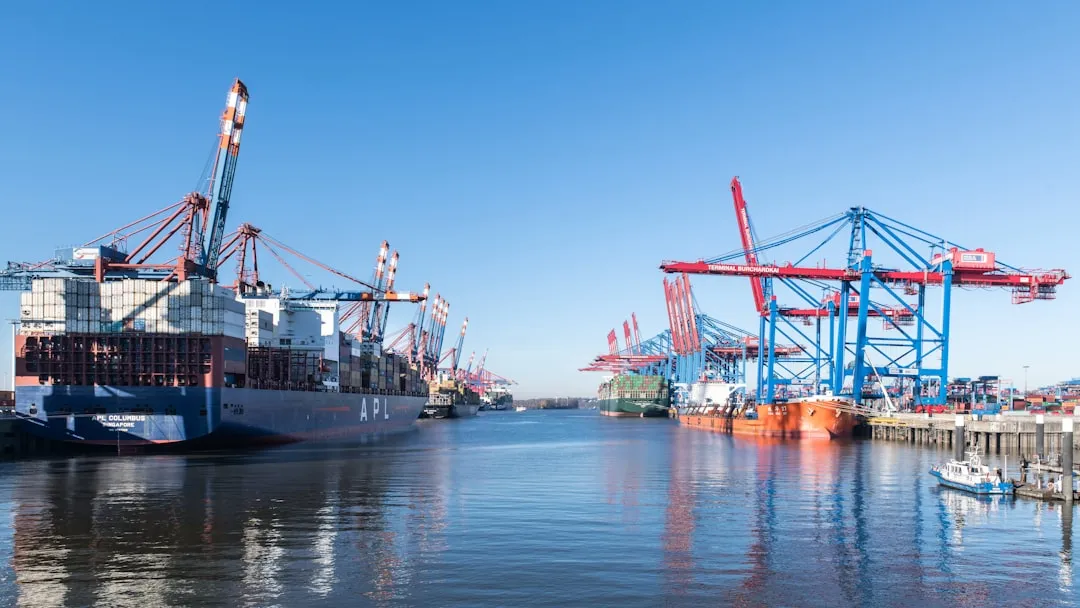
Container ship docked at a quay with gantry cranes — the berth-toe environment where Texas Tuff Rock Bags interrupt the scour mechanism that undermines the wall

Berth & Quay Wall Toe Scour

Place Texas Tuff Rock Bags or Texas Tuff Rock Logs along the toe of a quay wall, sheet pile, or gravity wall to interrupt the toe-scour mechanism that undermines the wall over time. Continuous toe lines work for cargo berths and bulk terminals; discrete bag groups work at container berths and corners where access is constrained. The flexible mesh sits against the wall without point-load risk.

Turbulent wake from a vessel underway — the concentrated jet impingement that propeller wash and bow-thrusters create in the berth pocket

Propeller-Wash & Bow-Thruster Scour

Container ships, RoRo vessels, and cruise ships generate concentrated propeller-wash and bow-thruster jets at every berthing cycle. Texas Tuff Rock Bags placed in the jet impingement zone dissipate the jet energy across the bag profile, holding the seabed in place against an event that re-occurs every vessel call. Sizing depends on vessel class, thruster power, and water depth — our engineering team works from PIANC-style impingement calculations.

Harbor waterfront with a steel revetment wall along the quay — the bulkhead toe where Texas Tuff Rock Bags absorb wave reflection and tidal scour

Harbor Bulkheads & Terminal Walls

Harbor bulkheads and terminal walls face the same toe-scour and wave-reflection mechanisms as outer-coast seawalls, but in a vessel-traffic environment. Texas Tuff Rock Bags continuous-line along the toe to absorb wave reflection and tidal scour. Bags can be placed during normal terminal operations — no formwork, no curing, no extended berth closure.

Mooring poles with rope at a marine terminal — the dolphin structures whose foundations Texas Tuff Rock Bags protect against tidal and wash-induced scour

Mooring Dolphins & Approach Channels

Mooring dolphins, breasting dolphins, and approach-channel side slopes erode under tidal current, wake, and vessel-induced wash. Bags placed at the dolphin base and along approach channel sides hold the bed material and protect the structure's foundation — extending design life and reducing re-dredging frequency in the approach.

Port Performance

How Texas Tuff Rock Bags Perform in Port Conditions

Port conditions combine continuous salt-water immersion, abrasion from sediment in the water column, and concentrated jet impingement from vessel thrusters. Texas Tuff Rock Bags are built from virgin polyester mesh — not recycled — because virgin polyester retains more strength under thermo-mechanical stress and emits roughly 30% fewer microplastics under ISO 4484-1 testing than recycled alternatives.

Independent laboratory testing certifies the material at a long-term service life in water under EN 12447 hydrolysis resistance, with approximately 30 years of UV resistance for any portion above the waterline (EN 12224). The raschel-weave mesh holds together if a single strand is cut by debris impact or anchor strike; a 3-ply polyester rope reinforces lifting points and the perimeter, with a 16 mm lifting rope on the 8-Ton offshore-grade unit.

Prop-wash impingement
Mesh dissipates jet energy across the bag profile
Salt-water immersion
EN 12447 — 50-yr service life
Microplastics
ISO 4484-1 — ~30% fewer than recycled
Anchor / debris impact
Raschel weave · 3-ply rope reinforcement
Berth Sizing

Choose the Right Bag for the Berth

Three weight classes plus the Texas Tuff Rock Log — each engineered for different vessel classes, jet powers, and water depths. The Rock Log is the strongest fit for continuous quay-wall toes.

Mesh / Fill
25 mm mesh · 50–200 mm fill rock
Volume
1.13 m³ · 1.9 m diameter
Profile
0.4 m tall · single stack
Best for
Marinas, small craft berths, low-thruster vessels, residential dock toes.
4-Ton Most specified
Mesh / Fill
25 mm mesh · 50–200 mm fill rock
Volume
2.71 m³ · 2.4 m diameter
Profile
0.6 m tall · single or stacked
Best for
Most-specified port size — cargo berths, ferry terminals, mid-class container berths.
Mesh / Fill
50 mm mesh · 75–200 mm fill rock
Volume
6.0 m³ · 3.0 m diameter
Profile
0.85 m tall · quad-layer mesh, 16 mm lifting rope
Best for
Large container berths, post-Panamax classes, high-thruster RoRo and cruise vessels.
Texas Tuff Rock Log Best for continuous quay toes
Mesh / Fill
Elongated mesh log — fills continuous linear runs
Volume
Built to quay length
Profile
Continuous toe / line
Best for
Continuous quay wall toes, harbor bulkhead toes, approach-channel sides.
Why the Rock Log fits continuous quay-wall toes

A single elongated mesh log armors the entire wall toe as a continuous line — no unit gaps for wave reflection or tidal scour to exploit, and fewer placement cycles between vessel calls.

Use the sizing calculator
Port Installation

Installation in an Operating Port

Port installations are scheduled around vessel calls, not around contractor convenience. Bags are filled at the staging yard in a steel production frame — 5 to 8 minutes per bag with an excavator and two laborers — then transported to the berth and placed during gaps in the vessel schedule. Placement is straightforward from the apron with an excavator or telehandler for shallow berth toes, or from a workboat or barge with a crane for deeper toes.

Most berth deployments need little to no foundation prep beyond clearing debris and confirming the line on the seabed. Slopes under 40° take bags in adjacent rows; steeper banks at side-slope channels stair-step with row overlap. The most critical step on every installation is tightening the ring and tying the support ropes at the bag neck — undertied bags lose their shape under jet impingement.

  1. 1

    Pre-fill bags at the staging yard so placement is decoupled from the vessel-call schedule.

  2. 2

    Time placement windows to scheduled gaps between vessel calls — no protracted berth closure.

  3. 3

    Tighten the neck ring and tie the support ropes — the single most critical step.

  4. 4

    Place from the apron, workboat, or barge by excavator, telehandler, or crane.

  5. 5

    Confirm line on the seabed; inspect by diver or ROV across the asset's service life.

Full installation guide
Port Comparison

Rock Bags vs. Riprap, Concrete Mattresses & Re-Dredging

Texas Tuff Rock Bags compete on the three axes that matter to port operations: time at berth, vessel-call disruption, and lifecycle cost vs the periodic re-dredge.

Deployment per unit
Texas Tuff
5–12 minutes
Riprap
Truck-and-place — variable
Concrete mattress
Crane-set panels; rigging cycles
Re-dredge
Day-to-week dredge campaign
Disruption to vessel calls
Texas Tuff
Place between calls
Riprap
Berth closure for placement
Concrete mattress
Berth closure for crane spread
Re-dredge
Berth closure during dredge
Behavior under prop wash
Texas Tuff
Conforms; dissipates jet
Riprap
Migrates under repeated jet
Concrete mattress
Cracks under cyclic load
Re-dredge
Repeats failure cycle
Lifespan in salt water
Texas Tuff
Long-term
Riprap
Decades, but displaces
Concrete mattress
Decades — concrete cracks
Re-dredge
Annual / biennial repeat
Lifecycle cost vs re-dredge
Texas Tuff
One-time armor
Riprap
One-time, but maintenance
Concrete mattress
One-time, but maintenance
Re-dredge
Recurring forever
Inspection / asset record
Texas Tuff
Discrete units — unit-by-unit
Riprap
Diffuse — hard to inventory
Concrete mattress
Discrete panels
Re-dredge
No asset — just bathymetry
Port FAQ

Port FAQ

Operations, sizing, and lifecycle answers for port authorities, terminal operators, USACE navigation districts, port engineers, harbor masters, and marine contractors.

Talk to engineering
One business day response.
+1 512-766-6608 →

01 Can rock bags be placed in an operating berth without an extended closure?

Yes. Bags are filled at the staging yard in advance and placed between vessel calls from the apron, a workboat, or a barge. Most berth scour repairs are completed in working windows that fit a normal vessel-call schedule — no formwork, no concrete cure, no protracted berth-out-of-service period.

02 How do rock bags hold up under repeated propeller wash and bow-thruster jets?

The flexible polyester mesh dissipates jet energy across the bag profile, and the bag-and-rock unit conforms to bed change rather than fracturing. Sizing depends on vessel class, thruster power, and water depth; our engineering team works from PIANC-style impingement calculations to size for the design vessel and event frequency.

03 Which size do I need for a container berth versus a marina?

4-Ton bags are the most-specified size for cargo, ferry, and mid-class container berths. 8-Ton bags are typical for post-Panamax container berths, high-thruster RoRo vessels, and cruise terminals. 2-Ton bags fit marinas, small craft berths, and residential dock toes.

04 How long do rock bags last in a port environment?

Independent laboratory testing rates Texas Tuff Rock Bags at a long-term service life in water under EN 12447 hydrolysis resistance. The mesh is virgin polyester, which retains more strength under thermo-mechanical stress and emits roughly 30% fewer microplastics under ISO 4484-1 testing than recycled alternatives.

05 Are rock bags a one-time install or do they require periodic maintenance?

Rock bags are designed as a one-time armor with a long-term in-water service life. Compared to a re-dredge cycle (annual to biennial in a high-thruster berth), the bag installation is a capital asset that reduces lifecycle cost across the port's asset register. Inspection by ROV or diver is straightforward — each bag is a discrete, identifiable unit.

Get a Port Quote

Get a Port Quote in One Business Day

Tell us about your berth, harbor, or terminal — design vessel, water depth, scour history, and target operating window. Our engineering team responds within one business day with sizing, lead time, and pricing.